Advanced Gamification Analytics Beyond Participation Metrics

Advanced Gamification Analytics Beyond Participation Metrics

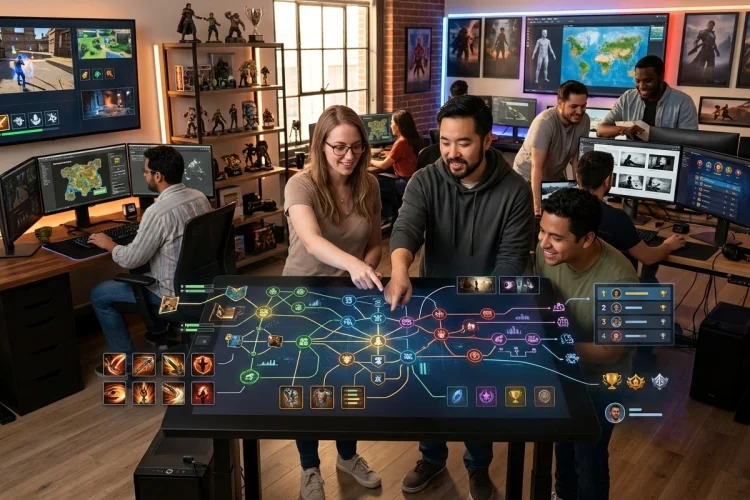
A gamified feature launches and participation jumps by 30%. Great result, right? Maybe. More people clicking challenges does not necessarily mean they are learning, improving, enjoying the experience, or planning to return next month. That is why Advanced Gamification Analytics needs to look beyond participation rates. Modern teams can measure progression quality, behavioral depth, motivation, … Read more

Advanced Reward Architecture for Meaningful Digital Experiences

Advanced Reward Architecture for Meaningful Digital Experiences

Not every meaningful digital reward needs a price tag. Sometimes unlocking a new creative tool feels better than receiving virtual currency. Sometimes recognition from a community matters more than another item added to an inventory. That is where Advanced Reward Architecture becomes useful. Instead of treating rewards as payments for activity, it organizes recognition, access, … Read more

Advanced Progression Systems for Long-Term Player Growth

Advanced Progression Systems for Long-Term Player Growth

A level number going up can feel satisfying, but it rarely carries an entertainment platform for years. Modern players may be improving mechanical skills, unlocking content, developing characters, building collections, completing stories, and earning social recognition at the same time. That is where Advanced Progression Systems become useful. Instead of relying on one endless XP … Read more

Advanced Cross-Platform Media Strategy for Every Screen

Advanced Cross-Platform Media Strategy for Every Screen

People no longer experience digital media through one screen from beginning to end. They may discover a series through a short video on their phone, watch the full episode on a television, discuss it on a tablet, and later search for related content on a laptop. That behavior changes how media teams should think about … Read more

Advanced Social Participation Systems That Build Stronger Communities

Advanced Social Participation Systems That Build Stronger Communities

Digital entertainment becomes much more powerful when users stop feeling like isolated consumers. A multiplayer match, livestream, virtual event, or creative platform can become a social place where people recognize each other, collaborate, compete, and develop shared routines. That is the idea behind Advanced Social Participation Systems. Instead of treating chat or friend lists as … Read more

Designing Immersive Media Around Presence, Not Visual Complexity

Designing Immersive Media Around Presence, Not Visual Complexity

A virtual world can contain millions of polygons, realistic reflections, and incredibly detailed textures yet still feel strangely artificial. Meanwhile, a visually simple environment can sometimes make users forget about the technology within minutes. That difference comes down to presence. When Designing Immersive Media, visual complexity should support the feeling of “being there,” not become … Read more

Advanced Branching Narrative Systems for Deeper Player Choice

Advanced Branching Narrative Systems for Deeper Player Choice

Interactive stories become interesting when players feel that their decisions actually matter. Choosing between two dialogue options is easy to implement, but building a world that remembers those choices several hours later is a much bigger challenge. Advanced Branching Narrative Systems go beyond simple decision trees. They combine story structure, variables, conditional logic, character states, … Read more

Designing Adaptive Interaction Systems for Smarter Digital Entertainment

Designing Adaptive Interaction Systems for Smarter Digital Entertainment

Digital entertainment is no longer built for one screen, one controller, or one type of user. A player may start on a phone, continue on a console, and later switch input devices. Designing Adaptive Interaction Systems gives product teams a way to make controls, difficulty, feedback, and interface behavior respond to real conditions. Done well, … Read more